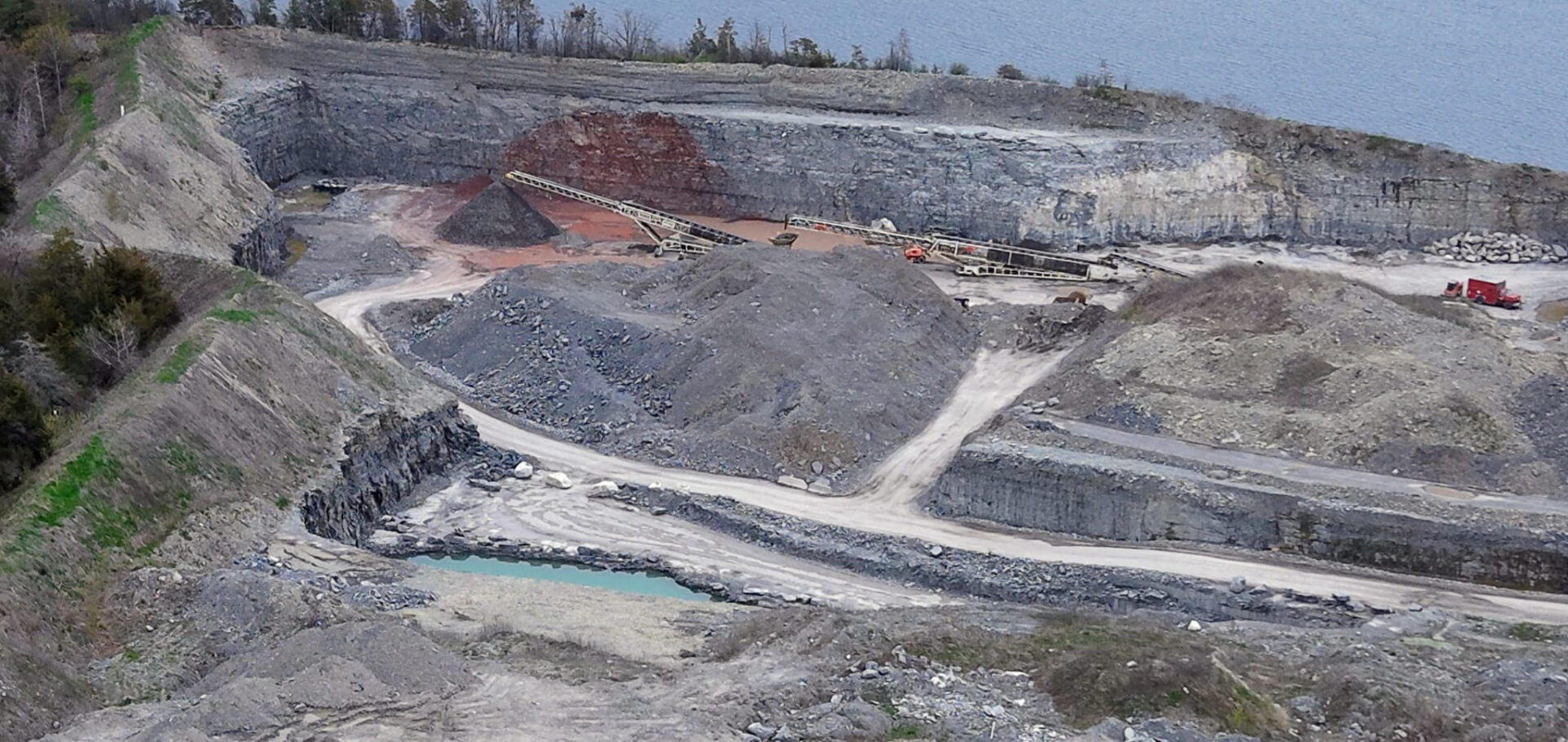
An aerial photograph of the Sophiasburgh portion of the Picton Terminals site, taken May 3, shows the extent of the quarrying on lands zoned RU1, or Rural, as well as aggregate stockpiles.
The red stains on the limestone cliff wall and in the surface water are from the storage of bauxite residue, which arrived at the facility in June 2025 and was stored there until January 5, 2026, according to John Grech, Director of Marine Logistics and Commercial Development at the Terminals.
Bauxite residue, also called Red Mud, is what remains after aluminum has been extracted from bauxite. A high concentration of iron oxide creates the red colour. A small amount of the sodium hydroxide used in the process of extracting the aluminum remains with the residue, causing a high pH, or alkalinity. It is hazardous if released into the environment via air or water. The residue is most commonly used in making cement clinker.
“Any residual material that remains eventually is controlled through our storm water management plan,” said Mr. Grech of the surface water, still visibly red five months after the bauxite residue was removed.
“The material is being used by local industry to support their production needs,” he said. “Picton Terminals acts as a critical part of several local supply chains.”
“We are following all required guidelines for handling, storing, and containing this material.”
“Storm water management is just one part of the process when we receive bauxite or any other bulk material. We have an Environmental Compliance Agreement which requires us to establish a Stormwater Management Plan and System for the collection, treatment and disposal of any stormwater run-off.
“We have implemented an Operations & Maintenance Manual to ensure shipments such as these are handled properly.”
Lindsay Davidson, spokesperson for the Ministry of the Envirnoment, Climate Change and Parks, confirmed, “the facility is required to manage materials to prevent off‑site impacts to human health and the environment.”
“At this time, the Ministry is not aware of any off‑site impacts.”
“Ministry staff conduct regular visits to the site. Any concerns or complaints are assessed, and appropriate follow‑up action is taken in accordance with the Ministry’s environmental compliance policy,” he said. —With files from Jason Parks
See it in the newspaper
 24° Cloudy